How Startups Can Invoice Clients Professionally From Day One
TL;DR
Invoicing is more than an administrative task. It directly impacts how clients perceive your business and how reliably you get paid. While manual invoicing may work early on, it quickly becomes inefficient as startups grow. By adopting a structured, connected invoicing process from day one, startups can maintain professionalism, improve cash flow, and scale more smoothly.
In the early stages of a startup, most of the focus is on building, delivering, and gaining traction. Processes like invoicing often take a back seat. For many teams, sending an invoice is as simple as creating a quick document, attaching it to an email, and moving on.
While this approach may work initially, it can quickly become a problem. Invoicing is not just an administrative task. It is a key part of how your business presents itself to clients and how reliably you generate revenue.
Getting it right from the beginning can make a significant difference.
Why invoicing matters more than most startups think
For startups, every client interaction shapes perception. A well-structured invoice signals professionalism, clarity, and reliability. It shows that your business is organized and serious about how it operates.
On the other hand, inconsistent or unclear invoices can create confusion. Clients may not fully understand what they are being charged for. Payment timelines may become uncertain. Follow-ups become necessary, and cash flow can be affected.
Invoicing is not just about getting paid. It is about building trust and maintaining smooth relationships with clients.
Common mistakes startups make with invoicing
In the beginning, invoicing is often handled manually. Teams use spreadsheets, basic templates, or ad-hoc documents. While this feels fast and flexible, it introduces several issues.
Invoices may lack consistency. Important details such as payment terms, breakdowns, or due dates may be missing. Tracking which invoices have been sent, viewed, or paid becomes difficult.
As the number of clients grows, these small issues start to add up. Teams spend more time managing invoices, following up on payments, and correcting errors. What should be a simple process turns into a recurring challenge.
What professional invoicing actually looks like
Professional invoicing is not about complexity. It is about clarity and consistency.
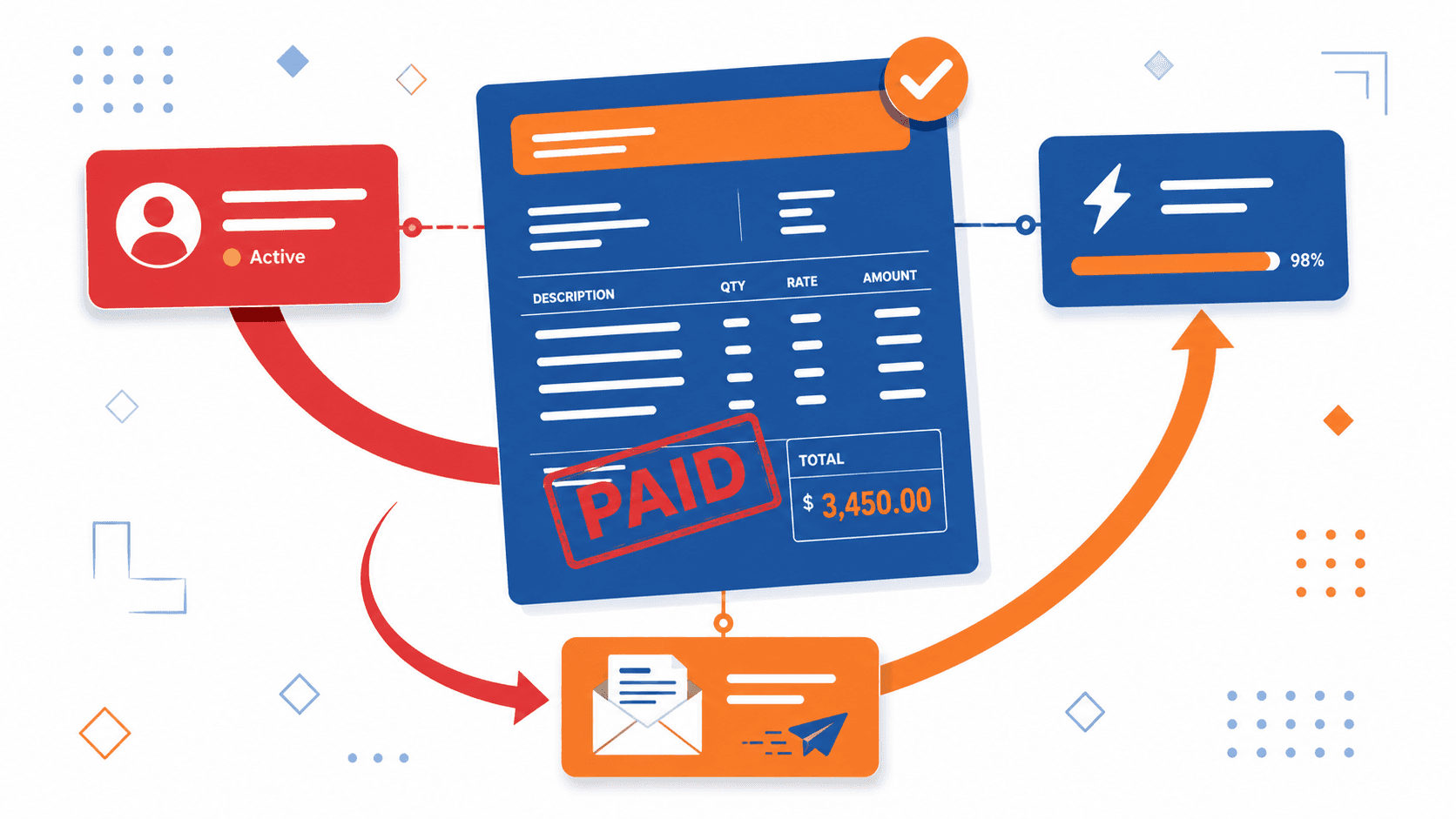
A good invoice clearly outlines what work was done, how much is being charged, and when payment is expected. It includes relevant details such as client information, billing periods, itemized services, and payment terms.
Equally important is how invoices are managed. Teams should be able to track invoice status, know which payments are pending, and maintain a clear record of transactions over time.
When invoicing is structured and consistent, it becomes a reliable part of your operations rather than a recurring task that needs attention.
The importance of connecting invoices to actual work
One of the biggest challenges startups face is disconnecting invoicing from the work that was done. Teams complete projects, track time, and manage deliverables, but invoicing happens separately.
This creates gaps. Details need to be manually compiled. Time spent on work may not be accurately reflected in invoices. Important billable items can be missed.
When invoicing is connected to actual work, this process becomes much smoother. Work completed flows naturally into billing. There is less room for error, and invoices better reflect the value delivered.
Why starting early makes a difference
Many startups wait until invoicing becomes difficult before improving their process. By then, inconsistencies are already in place, and fixing them requires more effort.
Starting early allows teams to build good habits from the beginning. Clients receive clear, professional invoices from day one. Internal processes remain consistent as the business grows.
This creates a strong foundation for scaling without introducing unnecessary friction later.
How Skapp helps startups invoice more effectively
Skapp simplifies invoicing by connecting it with the rest of your operations. Instead of treating billing as a separate task, it becomes part of a connected workflow.
Teams can generate invoices within the same system where projects, time tracking, and work management take place. This reduces the need to gather information manually and ensures that invoices reflect actual work completed.
Because invoicing lives alongside other operational data, teams gain better visibility into billing, payments, and overall financial flow. This makes it easier to stay organized and maintain consistency as the business grows.
Building a professional foundation from the start
Invoicing is one of the simplest ways a startup can present itself professionally. It reflects how clearly you communicate, how organized your operations are, and how seriously you treat your work.
By putting a structured invoicing process in place early, startups can avoid unnecessary complications and create a smoother experience for both their teams and their clients.
In many cases, the difference between a struggling process and a seamless one comes down to when you decide to take it seriously.
How can startups create professional invoices from the beginning?
Startups can create professional invoices by using structured templates, including clear payment terms, itemized breakdowns, and consistent formatting. Using invoicing software helps maintain accuracy and professionalism.
What should be included in a professional invoice?
A professional invoice should include client details, billing period, itemized services, total amount, payment terms, due date, and any relevant notes or references.
Why is manual invoicing not ideal for startups?
Manual invoicing can lead to inconsistencies, errors, and difficulty tracking payments. As the number of clients grows, it becomes time-consuming and harder to manage efficiently.
How does invoicing affect cash flow in a startup?
Clear and timely invoicing ensures clients understand payment expectations, reducing delays and improving cash flow. Poor invoicing practices can lead to late payments and financial uncertainty.