Tool Overload: Why Using Too Many Business Tools Is Slowing Your Team Down
TL;DR
Modern teams often use too many disconnected tools to manage projects, people, time, and billing. While each tool may solve a specific problem, together they create fragmentation, reduce visibility, and increase operational friction. Consolidating core workflows into a unified platform helps businesses reduce complexity, improve clarity, and scale more efficiently.
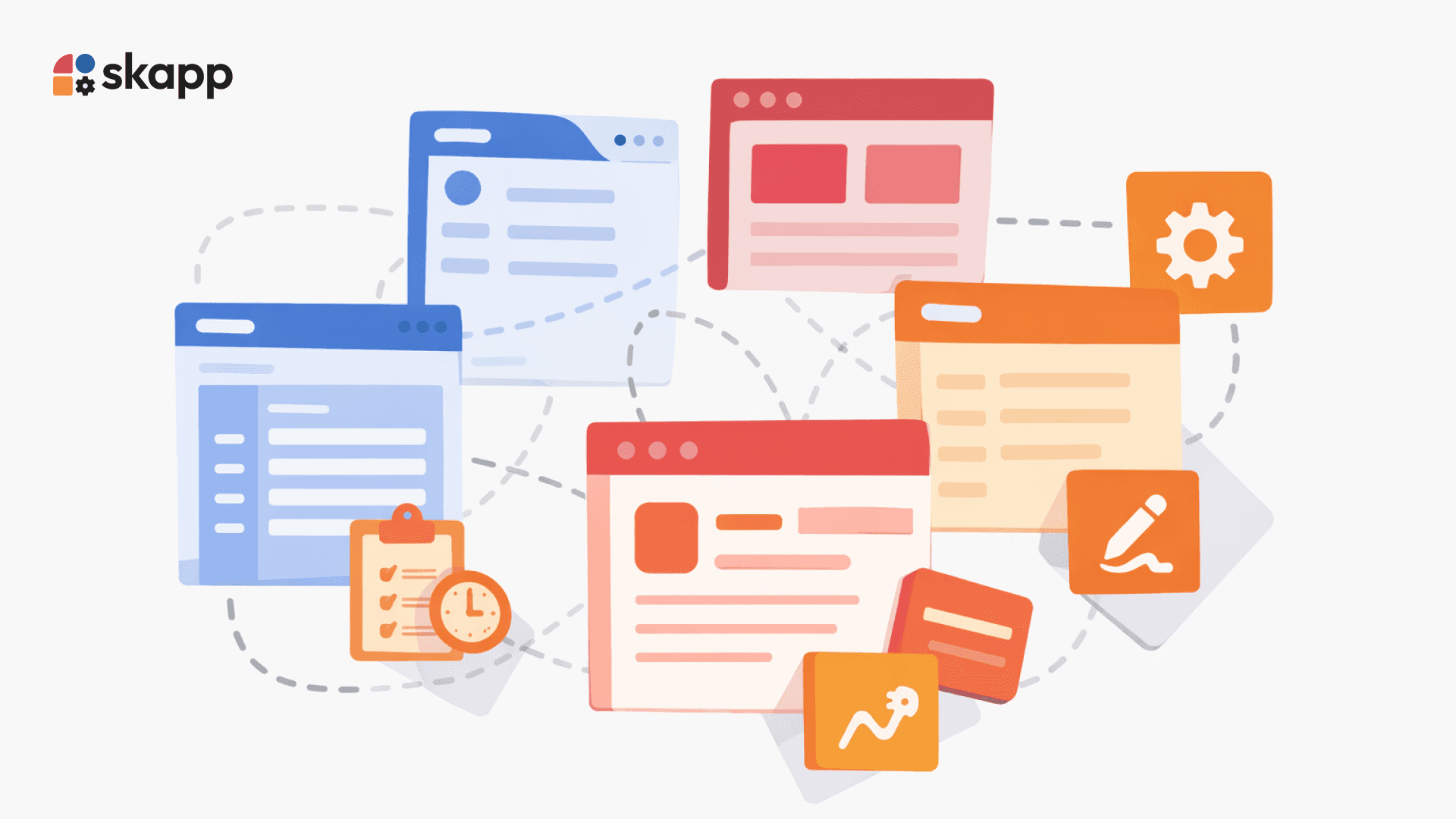
Modern businesses have access to more software than ever before. There is a tool formanaging projects, another for tracking time, one for HR, a separate platform for e-signatures, and yet another for invoicing. Each tool promises to make work easier. Yet for many teams, the reality is the opposite. Instead of clarity, they experience friction. Instead of speed, they encounter delays. This is the problem of tool sprawl, and it is quietly holding businesse s back.
What tool overload really looks like in everyday work
Tool overload happens when a business relies on too many disconnected applications to run its operations. On paper, everything seems covered. In practice, work becomes fragmented. Teams spend a significant part of their day switching between platforms, trying to find information, updating the same data in multiple places, and piecing together a complete picture of what is actually happening. Over time, managing the tools themselves starts to feel like a job.
How businesses end up with too many tools
No company ever intentionally creates a complicated software tool stack. Tool overload usually develops gradually. A team adds a project management tool to bring structure to their work. Later, they adopt a separate system to manage employee data. As the business grows, new needs emerge, and more tools are added to fill the gaps. Each decision makes sense on its own, but no one steps back to consider how everything fits together. As the organization scales, the cracks between these systems become increasingly visible.
Integrations are often seen as the solution, but they rarely fix the core problem. While integrations can move data from one tool to another, they are often limited, fragile, or incomplete. Important context still gets lost, data does not always sync correctly, and teams are left manually filling in the gaps. Instead of a smooth workflow, businesses end up maintaining a complex web of connections.
The hidden cost of using too many business tools
The impact of tool overload goes far beyond mild inconvenience. Constantly switching between tools disrupts focus and slows people down, even when the interruptions seem small. Over time, this leads to mental fatigue, more errors, and longer workdays without a corresponding increase in output. What feels like a productivity issue is often a tooling issue in disguise.
Fragmented systems also lead to fragmented data. When project information lives in one place, time tracking in another, and people data somewhere else, it becomes difficult to get a reliable view of how work is actually progressing. Planning suffers, reporting becomes manual, and leadership is forced to make decisions based on incomplete information.
Onboarding new employees becomes harder as well. Instead of learning how the business works, new hires must first learn how to navigate a collection of unrelated tools, each with its own interface, logic, and rules. This slows down productivity and creates frustration early in the employee experience.
Financially, tool overload adds up quietly. Subscription costs may seem reasonable individually, but combined, they often exceed expectations. Beyond licensing fees, there is also the cost of managing access, maintaining integrations, and dealing with inefficiencies that never show up on an invoice.
Why more tools don’t automatically mean better efficiency
There is a common belief that the best way to improve operations is to use the best tool for every specific task. In reality, efficiency comes from well-connected workflows, shared context, and consistent data. When tools operate in isolation, even the most powerful features fail to deliver real value. Workflows break at the handoff points, where one system ends and another begins.
This is why many teams feel busy but unproductive. The problem is not a lack of effort or capability, but the friction created by a disconnected toolset.
Moving toward a more unified way of working
As businesses mature, many begin to rethink their approach to software. Instead of adding more tools, they look for ways to simplify. Unified business platforms are gaining traction because they bring core operational functions into a single system. When people, projects, time, documents, and billing are connected, work flows more naturally. Information is easier to find, updates happen in context, and teams spend less time coordinating across systems.
How Skapp helps reduce tool overload
Skapp was built with this exact challenge in mind. Rather than forcing teams to stitch together multiple tools, Skapp brings essential business operations into one cohesive platform. People management, project tracking, time logging, time off, e-signatures, and invoicing are designed to work together from the start. This reduces context switching, minimizes duplicate work, and gives teams a clearer view of how everything connects.
By centralizing everyday operations, Skapp helps teams focus less on managing software and more on doing meaningful work.
Simplifying work starts with simplifying your tools
Tool overload does not appear overnight, and solving it does not require dramatic change all at once. It begins with recognizing that complexity is often self-inflicted. When businesses take a step back and simplify their tools, they often unlock better workflows, clearer visibility, and a more sustainable way of working.
In many cases, doing more with fewer, better-connected tools is the smartest move a growing business can make.
How does Skapp help reduce tool overload?
Skapp brings essential business operations such as people management, projects, time tracking, time off, e-signatures, and invoicing into a single platform. This reduces the need to switch between tools and helps teams work with shared context and cleaner workflows.
Can Skapp replace several tools a business is already using?
Yes. Skapp is designed to consolidate multiple operational tools into one system, allowing businesses to simplify their software stack without losing functionality as they grow.
Is Skapp suitable for growing teams and scaling businesses?
Skapp is built to support teams at different stages of growth. By centralizing operations early, businesses can scale without adding unnecessary complexity to their workflows.
How does using a unified platform like Skapp improve visibility across your business?
When operations are managed in one system, data stays connected. Project progress aligns with time spent, people availability is reflected in planning, and billing is tied to actual work. This gives teams and leaders a clearer, more reliable view of what’s happening across the business.