Why Your Startup Needs a Leave Management System Before You Think You Do
TL;DR
Leave management may seem simple in the early days of a startup, but informal processes quickly break down as teams grow. Without a clear system, visibility drops, planning becomes unreliable, and small gaps in communication turn into operational issues. Introducing a leave management system early helps startups maintain clarity, plan effectively, and scale without unnecessary friction.
In the early days of a startup, structure often takes a back seat to speed. Teams are small, communication is constant, and everyone has a general sense of what is happening. Taking time off is simple. A quick message in a chat group or a conversation with a founder is usually enough.
At this stage, a formal leave management system can feel unnecessary. It seems like something larger companies need, not a fast-moving team trying to build momentum.
But as startups grow, the way they manage something as simple as time off can quickly become a source of confusion, misalignment, and operational friction.
Why leave management feels simple at first
When a team consists of just a few people, leave tracking is informal by design. Everyone knows who is available, and decisions are made quickly without much coordination. There is little need for policies, systems, or documentation.
This simplicity works because visibility is high and complexity is low.
However, this approach depends entirely on shared awareness. As soon as that begins to fade, the cracks start to show.
The moment things start to break
Growth introduces distance. New hires join, teams form, and responsibilities become more defined. Suddenly, not everyone knows who is on leave or when they will be back.
What used to be a simple message now turns into:
Missed updates
Overlapping leave requests
Unclear approvals
Last-minute rescheduling
Managers may approve leave without realizing how it affects project timelines. Teams may plan work assuming availability that no longer exists. Small gaps in communication begin to create larger operational issues.
At this point, leave management is no longer just an HR concern. It starts affecting execution.
The hidden cost of managing leave informally
Informal leave tracking often relies on a mix of chat messages, spreadsheets, and memory. While this may seem manageable, it creates hidden costs that grow with the team.
Without a clear system, visibility becomes limited. Teams cannot easily see who is available at any given time. Planning becomes reactive instead of proactive. Workloads become uneven, and deadlines are harder to meet.
There is also the issue of consistency. Different managers may handle leave requests differently. Policies may exist informally but are not applied evenly. Over time, this can lead to confusion and even dissatisfaction among employees.
What appears to be a small operational detail can quietly impact productivity, team morale, and overall efficiency.
Why startups should think about leave management early
Many startups wait until problems become obvious before introducing structure. By then, habits are already formed, and changing them becomes more difficult.
Introducing a leave management system early does not mean adding unnecessary complexity. It means putting a simple, clear framework in place before confusion sets in.
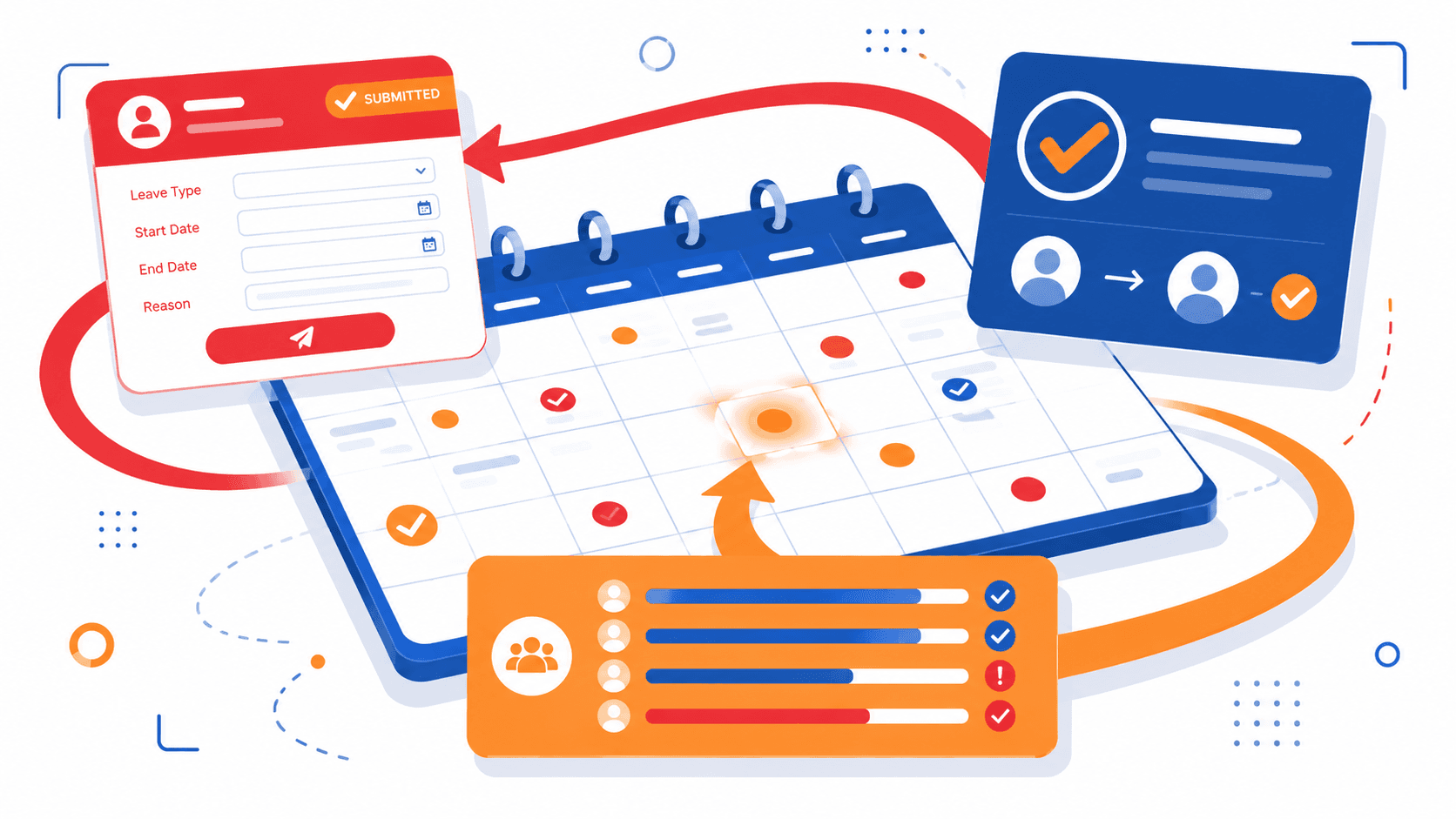
With a system in place, leave requests follow a consistent process. Approvals are visible. Team availability is easy to understand. Planning becomes more reliable because it is based on accurate information.
This creates a foundation that supports growth rather than reacting to it.
How leave management connects to the rest of your operations
Time off does not exist in isolation. It directly affects project timelines, team capacity, and overall productivity.
When leave data is disconnected from the rest of the business, teams are forced to manually account for availability. This increases the risk of overcommitment and delays.
When leave management is part of a connected workflow, availability becomes part of planning. Managers can see who is available before assigning work. Teams can adjust timelines with confidence. Decisions are based on real data rather than assumptions.
This is where structured leave management becomes a core part of operations, not just an administrative task.
Building clarity without slowing your team down
A common concern for startups is that introducing systems will slow them down. In reality, the right systems do the opposite. They reduce the need for constant communication and eliminate uncertainty.
A good leave management system does not add friction. It removes it.
Instead of asking who is available, teams can see it instantly. Instead of tracking requests manually, approvals follow a clear process. Instead of reacting to conflicts, teams can plan ahead.
This allows startups to maintain speed while improving clarity.
How Skapp simplifies leave management for growing teams
Skapp’s Time-Off module is designed to bring structure to leave management without adding complexity. Teams can define leave types, manage policies, track balances, and handle approvals in one place.
Leave data is connected to employee profiles and visible across the platform, making it easier to understand availability in context. Managers can make informed decisions, and teams can plan work with greater confidence.
Because Skapp integrates leave management with other operational workflows, it ensures that time off is not treated as an isolated process but as part of how work is planned and executed.
Getting ahead of growth
Startups are built to grow, but growth brings complexity. The goal is not to avoid structure, but to introduce it at the right time.
Leave management may seem like a small detail, but it plays a larger role in how teams operate than most expect. By addressing it early, startups can avoid unnecessary friction and build a more stable foundation for scaling.
In many cases, the best time to introduce a leave management system is before it feels necessary. That is when it has the greatest impact.
Why do startups need a leave management system early on?
Startups grow quickly, and informal processes that work for small teams often break as complexity increases. A leave management system ensures visibility, consistency, and better planning from the start.
Can’t startups manage leave using spreadsheets or chat tools?
While spreadsheets and chat may work initially, they become difficult to maintain as teams grow. They lack real-time visibility, structured approvals, and consistency, which can lead to errors and misalignment.
How does leave management affect project planning?
Leave directly impacts team availability. Without clear visibility, teams may assign work based on incorrect assumptions, leading to delays and overcommitment.
Does implementing a leave system slow down a startup?
No. A well-designed leave management system reduces friction by removing the need for constant coordination and manual tracking, allowing teams to move faster with more clarity.